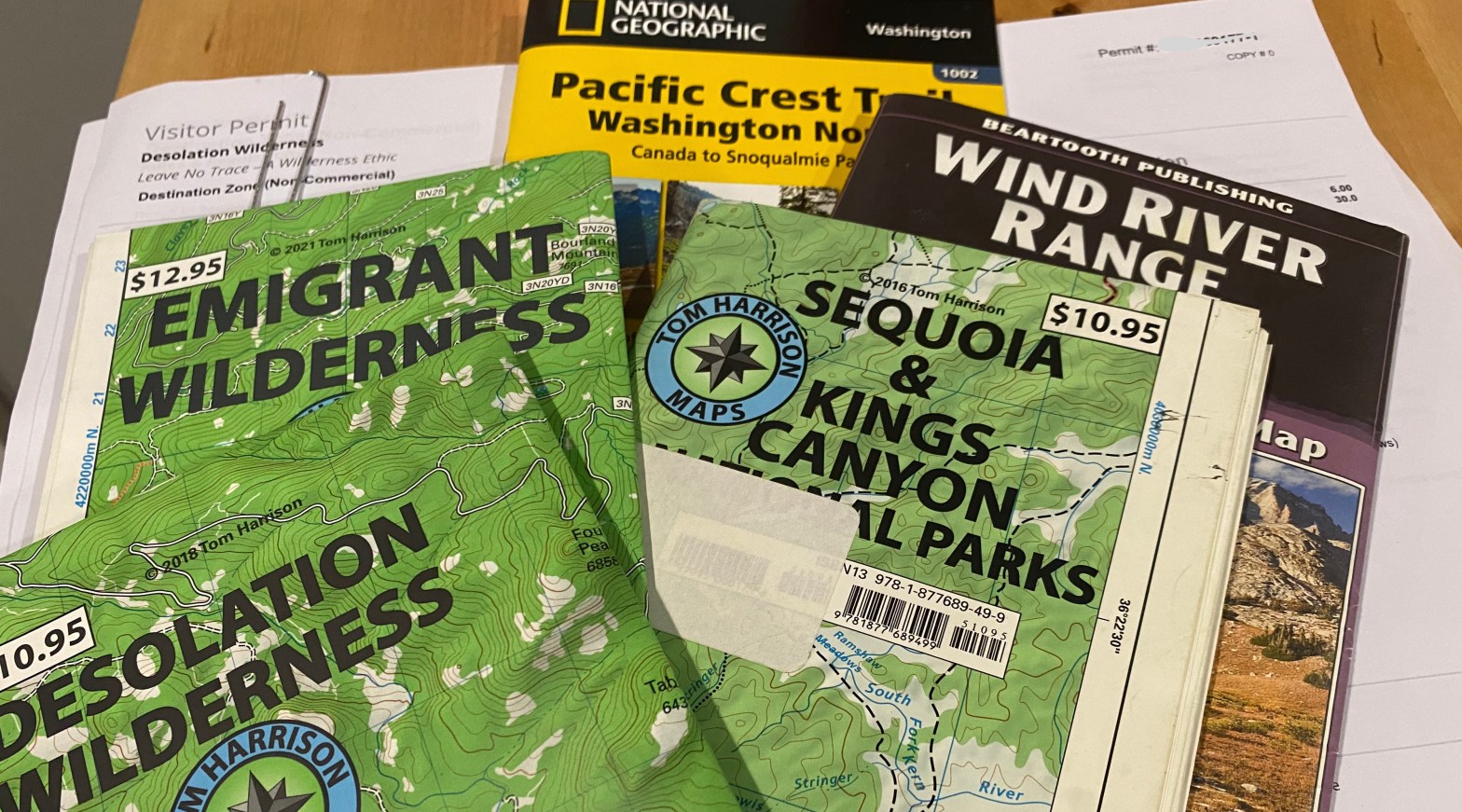
I’m heading out soon to spend the summer on an extended backpacking trip, hiking in wilderness areas in California’s Sierra Nevada Mountains, Washington’s Cascade Mountains, and Wyoming’s Wind River Range.
I may share photos and a few words here along the way for those friends and family that are interested in my travels, but my intention is to be present and disconnect, so I may not post until I get back. At the end of this post, you can subscribe to get any updates by email.
You can also check in on by whereabouts anytime at this link, which shares my location while I’m on trail.
The Plan
I’ll be spending 42 days on trail covering 435 miles through wilderness areas and national parks. I’m excited to revisit some old favorites, and see for the first time many new places I’ve been eager to visit.
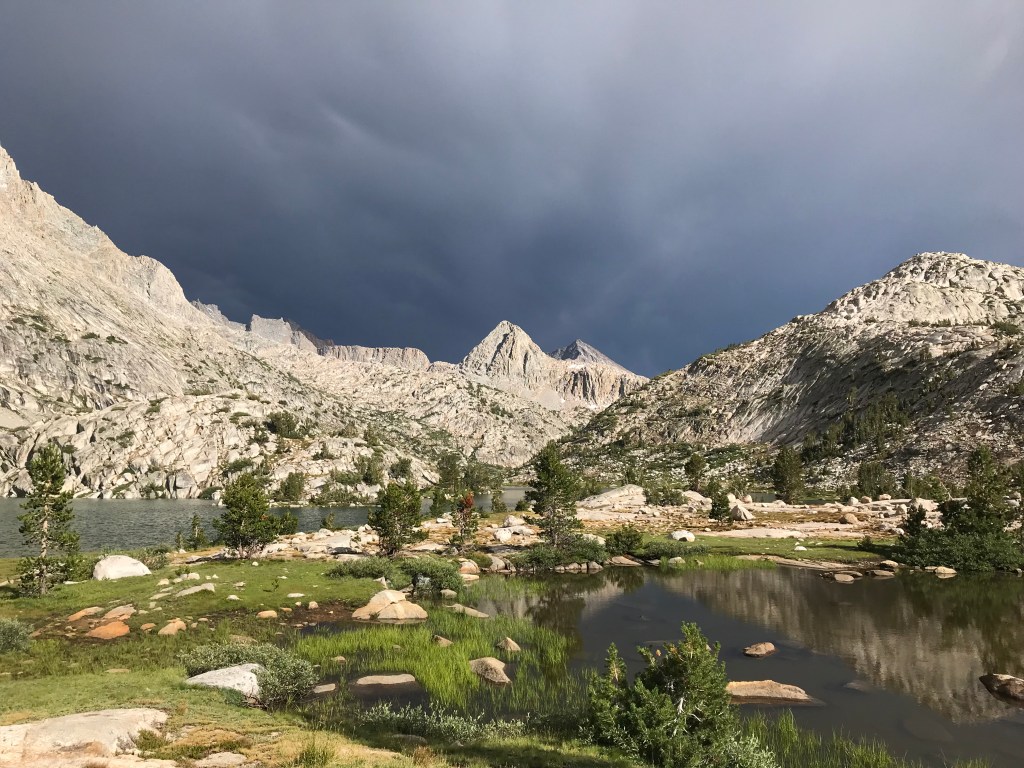
July 4-6: Desolation Wilderness near Lake Tahoe (California) 30 miles
July 8-12: Emigrant Wilderness (California) 50 miles
July 14-20: Humphreys Basin, Evolution Valley, and Dusy Basin in the John Muir Wilderness/Kings Canyon National Park (California) 55 miles
July 21-26: John visits!
July 27-29: Mineral King area of Sequoia National Park (California) 30 miles
August 2-16: Pacific Crest Trail Sections J and K (Washington) 200 miles
August 17-21: John visits! And North Cascades National Park.
August 22-28: Wind River Range (Wyoming) 70 miles
Preparations
I’ve been planning and preparing for this summer since January, and now it’s only a week away! Here’s a few common things I get asked about regarding preparation.
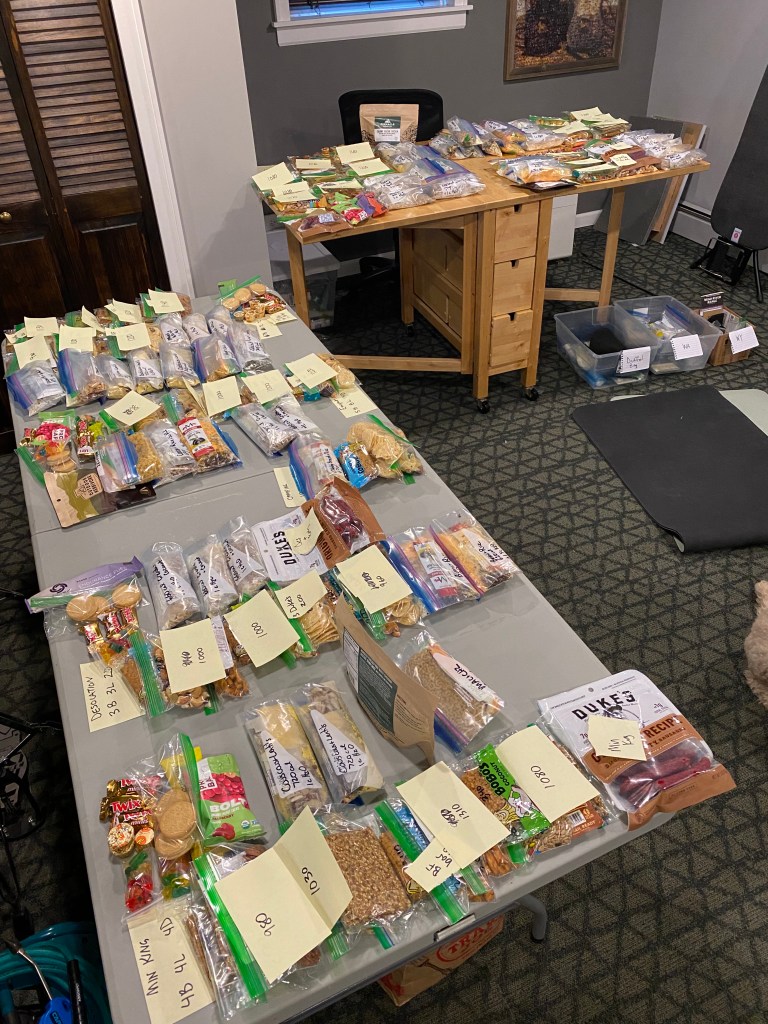
FOOD Planning food for 42 days is no joke! I aim for 130 calories per ounce of food to keep the weight as low as possible. I also look for low volume items since I will be carrying as many as 9 days worth of food at a time. The best way to do this is to focus on high-fat foods, like peanut butter, olive oil, coconut oil, nuts, and seeds.
I also bring a lot of carbs, the body’s primary fuel source. Protein too, because it helps rebuild muscles at the end of a long day. Most of my protein comes from dehydrated beans and TVP, as well as nuts and some sausage.
Salty snacks and electrolyte drinks help with hydration.
Breakfast is powdered milk and granola, muesli, or oatmeal, with chia and hemp seeds for extra calories. Dinners are mostly some combination of instant rice, pasta, instant mashed potatoes, dehydrated beans or lentils, dehydrated vegetables, and olive or coconut oil. Between those two meals, I snack on things like nuts, pretzels, peanut butter, and bars every two hours.
TRAINING Did you know Illinois is the second flattest state in the US? Training for mountainous terrain is a bit of a challenge here. I make good use of the stairmill at the gym, haul my pack up and down the stadium steps at a nearby college, and do long training hikes at The Morton Arboretum, Herrick Lake, and Palos Forest Preserves. I also do weight training and have been focusing on building up my cardio endurance, which dropped off a lot over the course of Covid.
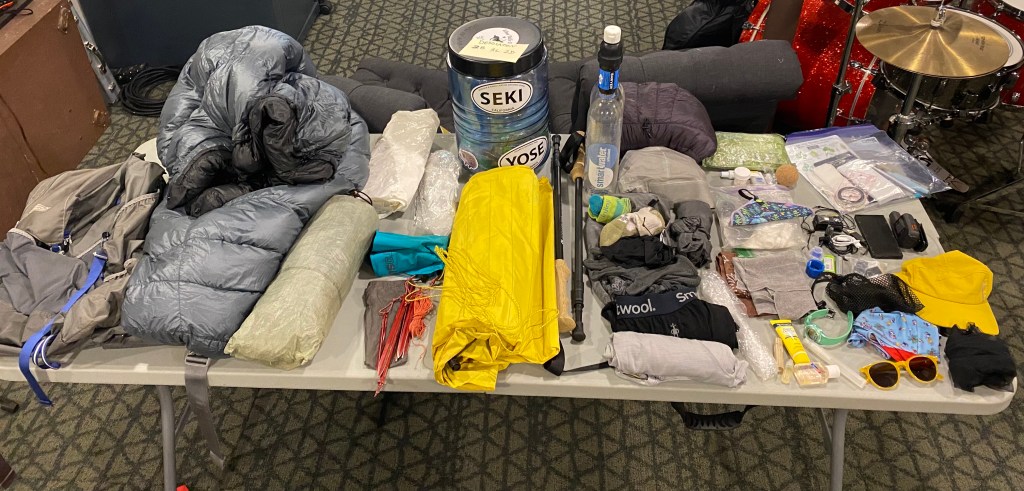
GEAR My gear is pretty dialed in, so not a lot of changes for me this year. My philosophy is to go as light as possible by taking only what I actually need (not what I might need), and by bringing the lightest possible version of those things. I’m not the lightest weight backpacker out there, but my gear works great for me. You can see my gear list here.
SAFETY This is mostly a solo journey. I take a variety of precautions to stay safe, including developing the necessary skills to make good decisions and respond to conditions appropriately.
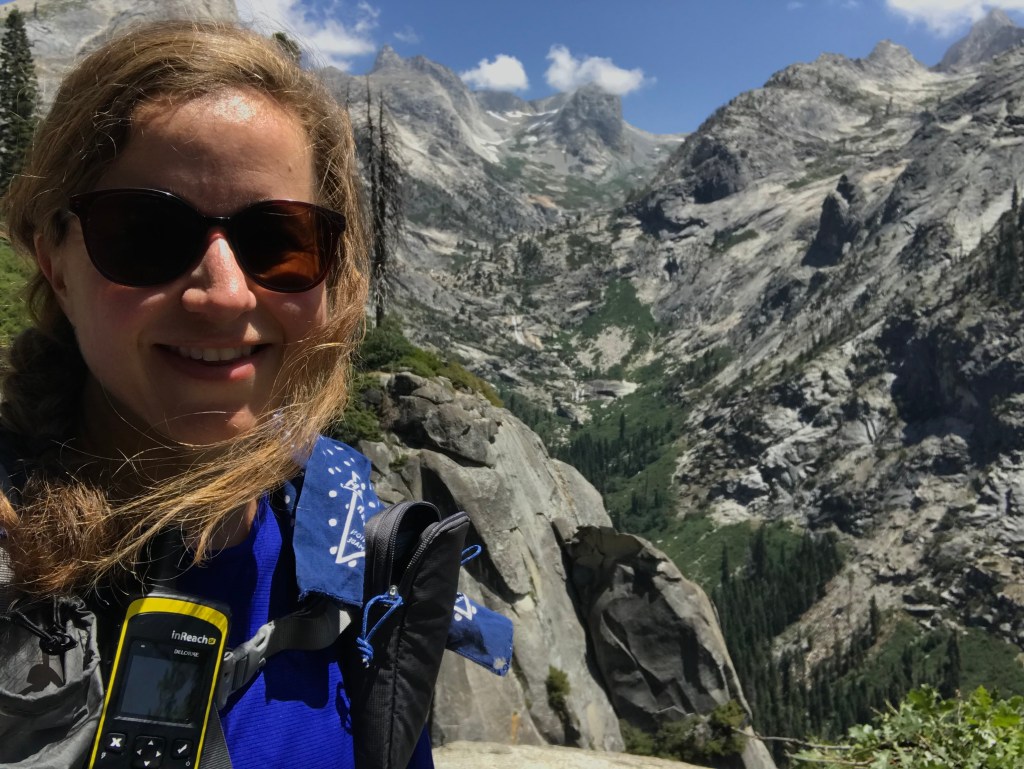
- Garmin InReach satellite communicator. Cell service is rare in the backcounty, but with an InReach, I can communicate by satellite with John and my family. They can also track my location. And if things hit the fan, an SOS button will send an alert to local search and rescue (SAR).
- Making a trip plan. I research the potential hazards in the areas I’ll be hiking (weather, terrain, wildlife, fire) and prepare accordingly. I share my intended routes with family. I know what my bailout options are if I need to make an unanticipated exit. I share contact information for all the land and law agencies that oversee the places I’ll be. I leave a trip plan and description of myself at the trailhead.
- Managing risk. We manage risk every day and don’t really think about it. When we get into a car, we buckle our seat belts, check our mirrors, and stop at red lights. I have learned to manage risk in the wilderness just like I’ve learned how to do it behind the wheel. I have experience backpacking in alpine environments. I am certified in wilderness first aid so I can better respond to unexpected events. I practice good food storage techniques. I respect my limits. I stay aware of my surrounding. Backpacking has risks, but everything does!
I head out to Tahoe on July 1 and will spend a couple days acclimating before a three-day, 30-mile adventure in the Desolation Wilderness, along the PCT. Craggy peaks, alpine lakes, and solitude await!
Until later, happy trails!
Brooke
 Hike Well